Why Choose a Certified Commercial Roofer for Your Building?
September 17, 2026
Blog
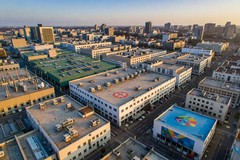
Take a drive through almost any business district and you will notice a pattern overhead: warehouses, retail centers, office buildings, and factories nearly all sport flat roofs rather than the peaked designs so common on houses. It is one of the most consistent features in commercial architecture, and it leaves a lot of property owners scratching their heads. So why do commercial buildings have flat roofs when residential homes almost always go with a slope? As a roofing company in Wausau, we get this question often, and the answer comes down to a mix of practicality, economics, and the way commercial buildings are actually used.
The short version is that flat roofs solve problems that pitched roofs cannot solve as efficiently on large structures. But the full picture is more interesting than that, and understanding it can help you make smarter decisions about your own building. Let us break down the real reasons behind this design choice.
Commercial buildings tend to be enormous compared to homes. A single warehouse or big-box store can span tens of thousands of square feet, and covering that kind of footprint with a steep, pitched roof would be wildly impractical. A sloped roof over a massive building would create a soaring, wasted attic space and require an incredible amount of framing, material, and labor to support all that additional height.
Flat roofs keep the structure lower and more manageable. They allow builders to cover a wide area without the engineering headaches that come with supporting a tall, angled roofline over a huge span. This is a big part of why do commercial buildings have flat roofs so consistently across industries. When you are covering acres of floor space, keeping the roof flat is simply the most sensible approach from both a design and construction standpoint.
Budget drives nearly every commercial building decision, and roofing is no exception. Flat roofs require less material than pitched roofs because there is less surface area to cover and far less structural framing involved. Fewer materials and simpler construction translate directly into lower upfront costs, which matters enormously when you are building at a commercial scale.
Speed is another advantage. Flat roof systems can be installed faster than complex pitched roofs, getting a building enclosed and operational sooner. For developers and business owners, time on a construction site is money, and a quicker roof installation in Wausau keeps projects on schedule and budgets in check. That efficiency is a major reason flat designs dominate the commercial landscape.
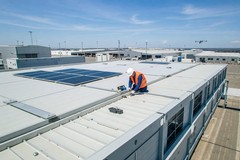
Here is a reason many people overlook. Commercial buildings run on serious mechanical systems, including HVAC units, exhaust fans, ventilation systems, and sometimes even solar arrays. All of that equipment needs a home, and a flat roof provides the perfect out-of-the-way platform.
Placing bulky units on the roof keeps them off the ground, where they would take up valuable usable space, and hides them from customer view. It also makes maintenance more straightforward, since technicians can walk the roof surface safely to service equipment. A pitched roof simply cannot offer this kind of accessible, level staging area. When you consider how much a modern commercial building relies on rooftop systems, it becomes clear why do commercial buildings have flat roofs as the default choice. The roof is not just a cover. It is functional real estate.
Because flat roofs are, well, flat, they are far safer and simpler to walk on than steep-sloped surfaces. This makes routine inspections, cleaning, and repairs much more practical for building owners and roofing crews alike. Regular maintenance is essential to getting the most life out of any commercial roof, and a level surface removes many of the hazards that come with servicing a pitched roof.
That accessibility encourages proactive care. Scheduling seasonal inspections and addressing small issues before they grow is much easier when your roofing team can move around safely. If you want to stay ahead of problems, our roof repair and inspection services are built around exactly this kind of preventative approach for businesses throughout Wausau and the surrounding areas.
No roofing style is perfect, and flat roofs do come with considerations worth knowing. The most obvious is drainage. Because water does not naturally run off a flat surface the way it does on a slope, these roofs rely on carefully engineered drainage systems, including internal drains, scuppers, and slight tapering built into the design. When installed and maintained properly, drainage works reliably, but neglect can lead to ponding water, which is one of the leading causes of premature roof aging.
Flat roofs also need the right membrane materials to handle Wisconsin weather, from heavy snow loads to freeze-thaw cycles. This is where quality installation and material selection really matter. A well-built flat roof using modern single-ply membranes, modified bitumen, or metal systems can perform for decades. To summarize the key trade-offs at a glance:
The good news is that these considerations are entirely manageable with proper design and a maintenance plan. Understanding both sides helps you appreciate the full answer to why do commercial buildings have flat roofs and how to keep yours performing at its best.
If your commercial building already has a flat or low-slope roof, you have several paths for keeping it in top shape or upgrading its performance. Modern membrane systems offer excellent waterproofing and energy efficiency, while metal solutions bring outstanding durability and longevity. For buildings with existing metal roofs that are showing their age, metal retrofit roofing for your Wausau-area building can be a cost-effective way to restore performance without a full tear-off, adding years of protection while minimizing disruption to your operations.
Choosing the right system depends on your building's age, current roof condition, budget, and long-term goals. That is where working with an experienced commercial roofing team pays off. You can explore our full range of commercial roofing services to see which approach fits your property, whether that means a repair, a recover, or a complete replacement.
So the next time you look out over a sea of flat commercial rooftops, you will know it is no accident. Flat roofs make sense for large buildings because they are affordable, quick to build, easy to maintain, and they create valuable space for the equipment that keeps a business running. The reasons why do commercial buildings have flat roofs all come back to one theme: practicality at scale.
Whether you are planning new construction, weighing a replacement, or simply want a professional to assess the condition of your current roof, our team is here to help businesses across Wausau and neighboring communities protect their investment. Reach out to contact us for a straightforward conversation about your building and the roofing options that make the most sense for it.
September 17, 2026
September 15, 2026
September 3, 2026
September 1, 2026