Warehouse Roof Materials: What Are Warehouse Roofs Made Of?
September 1, 2026
Blog
A warehouse roof covers more square footage than almost any other part of your building, and the material sitting on top of that expanse determines everything from your energy bills to how often you call for repairs. Yet many facility owners have never asked the basic question: what are warehouse roofs made of? Understanding the answer helps you make smarter decisions when it comes time to repair, recover, or replace, and it protects the inventory and equipment stored underneath.
At NRG Commercial Roofing, we work with warehouse owners every day who want a roof that performs for decades without draining the maintenance budget. If you are exploring options or need roofing services in Wausau and beyond, this guide breaks down the most common warehouse roof materials, what sets them apart, and how to think about the right fit for your building.
Warehouse roofs are typically low-slope or flat, which rules out the shingles you see on houses and calls for materials designed to handle standing water, wide temperature swings, and heavy foot traffic from HVAC crews. So when clients ask what are warehouse roofs made of, the honest answer is that a handful of proven systems dominate the industry, each with its own strengths.
The most widely used options include single-ply membranes such as TPO, EPDM, and PVC, along with metal roofing, modified bitumen, and built-up roofing systems. The right choice depends on your climate, budget, roof size, and how the building is used. In central Wisconsin, where snow load and freeze-thaw cycles put roofs under real stress, durability and water resistance carry extra weight.
Single-ply membranes are among the most popular choices for modern warehouses because they are lightweight, cost-effective, and relatively quick to install over large areas. These systems come in large sheets that are mechanically fastened, adhered, or ballasted to the roof deck, with seams welded or sealed to create a continuous waterproof surface.
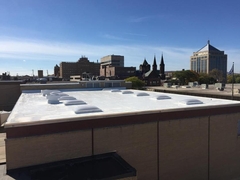
TPO (thermoplastic polyolefin) has surged in popularity thanks to its reflective white surface, which bounces sunlight and helps keep interior temperatures down during warm months. EPDM (a synthetic rubber) is prized for its longevity and flexibility, handling temperature extremes without cracking. PVC membranes offer excellent resistance to chemicals and grease, making them a strong pick for warehouses tied to manufacturing or food processing. When a facility owner asks what are warehouse roofs made of today, single-ply membranes are frequently the first materials that come to mind.
Metal remains one of the most durable warehouse roofing materials available, and it is common on both older and newer facilities across Wausau and the surrounding areas. Steel and aluminum panels resist fire, shed snow well, and can last for decades with proper maintenance. Standing seam metal systems, where the fastened seams are raised above the water line, do an especially good job of keeping moisture out.
The main challenges with metal are corrosion over time and the potential for leaks at seams and fastener points as panels expand and contract. The good news is that an aging metal roof does not always need full replacement. A recover system can extend its life significantly while adding insulation and a fresh waterproof layer. If your facility has an existing metal roof showing its age, our options in metal roof recover in Wausau are often a smart alternative to a costly tear-off.
Before single-ply membranes became widespread, built-up roofing (BUR) was the standard for flat commercial roofs, and it still serves many warehouses well. BUR consists of alternating layers of bitumen and reinforcing fabric, topped with a layer of gravel or a reflective coating. The result is a thick, redundant system that stands up to foot traffic and provides excellent waterproofing through multiple plies.
Modified bitumen is a more modern evolution of this approach. It incorporates polymers into the asphalt to improve flexibility and performance in cold weather, which matters a great deal in Wisconsin winters. These systems can be torch-applied, cold-applied, or self-adhered, and they hold up well against the freeze-thaw cycles that punish flat roofs in our region. For warehouses with heavy rooftop equipment or regular maintenance access, the toughness of these layered systems is a real advantage.
Knowing what warehouse roofs are made of is only half the equation. Choosing the right material for your specific building means weighing a few practical factors against your goals and budget. No single system is best for every situation, and the smartest decision usually comes from matching the material to how the building actually operates.
A professional evaluation of your existing roof, deck condition, and drainage will narrow these options quickly. Our team can walk your roof, explain the trade-offs in plain terms, and recommend a system that fits both your building and your budget. You can review the full range of our commercial roofing services to see how we approach each project.
Whatever material sits atop your warehouse, its lifespan depends heavily on maintenance. Small problems like ponding water, loose flashing, and separated seams tend to grow quietly until they cause interior damage. Scheduling a routine roof inspection in the Wausau area catches these issues early, when they are far less expensive to address. Regular checkups also help you plan for eventual replacement instead of being caught off guard by a sudden failure.
When damage does appear, prompt attention keeps a minor issue from spreading across the deck and insulation. A fast, professional roof replacement in Wausau and its surrounding cities can preserve the integrity of the entire system and protects the goods stored below. Whether you have a single-ply membrane, a metal panel roof, or a built-up system, timely upkeep is the single most reliable way to get the full service life out of your material.
So the next time someone asks what are warehouse roofs made of, you will have a clear picture: single-ply membranes, metal, modified bitumen, and built-up systems each bring distinct benefits, and the best choice depends on your climate, building use, and long-term plans. Understanding those differences puts you in a stronger position when it is time to repair, recover, or replace.
NRG Commercial Roofing serves warehouse and facility owners throughout Wausau and neighboring communities with honest guidance and quality workmanship. If you are ready to talk through your options or simply want a professional set of eyes on your existing roof, reach out to our team and we will help you protect one of your building's most important assets.
September 1, 2026
August 17, 2026
August 15, 2026