Warehouse Roof Types: What Is Usually Used and Why?
October 15, 2026
Blog
Walk past any industrial park and you will notice something: warehouse roofs look almost nothing like the pitched, shingled roofs on homes. That is no accident. These enormous flat or low-slope surfaces are engineered to cover vast interior spans, shed water efficiently, and stand up to decades of weather with minimal interruption to the business below. If you have ever asked what type of roof is used for warehouses, the answer depends on the building's size, budget, and how it is used day to day. As experienced commercial roofing contractors in the Wausau region, we help building owners sort through those choices every week.
The right system does more than keep rain out. It affects energy costs, maintenance demands, and how long the roof lasts before it needs serious attention. Understanding the most common options makes it far easier to protect your investment and avoid surprises down the road.
Warehouses present a unique set of challenges that residential and even many commercial roofs do not. They cover huge footprints, sometimes hundreds of thousands of square feet, with few interior supports to break up the span. They often house inventory, equipment, or temperature-sensitive goods that must stay dry and climate-controlled. And because downtime costs money, the roofing system has to be durable and relatively low-maintenance.
That combination pushes most warehouse construction toward low-slope or flat roofing rather than steep-pitched designs. A low-slope roof is more economical to build over a wide area, easier to walk for inspections and repairs, and better suited to carrying rooftop equipment like HVAC units, vents, and solar arrays. When people ask what type of roof is used for warehouses, the flat or low-slope profile is almost always the starting point, and the real decision comes down to which membrane or material covers it.
Several proven systems dominate the industrial market, each with its own strengths. The best fit depends on your climate, your budget, and how the building is used.
Each of these systems can serve a warehouse well when it is installed correctly and matched to the building's needs. The differences in cost, lifespan, and energy performance are where expert guidance pays off.
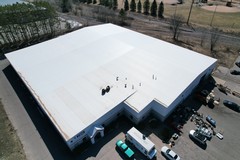
If you tour newer warehouses around Wausau and the surrounding areas, you will find single-ply membranes everywhere. TPO in particular has surged in popularity because it balances affordability with real performance. Its reflective surface deflects sunlight instead of absorbing it, which can lower cooling demands during summer months. The seams are typically heat-welded, creating a continuous, watertight barrier that holds up against wind uplift and ponding.
EPDM remains a dependable contender, especially for owners who value proven durability and simple maintenance. Its dark surface absorbs heat, which can actually be an advantage in colder northern climates by helping shed snow. PVC earns its place in facilities where chemical exposure or stricter fire ratings are a concern. When clients ask us what type of roof is used for warehouses in our region, single-ply membranes are frequently the recommendation because they combine long service life with manageable upfront costs.
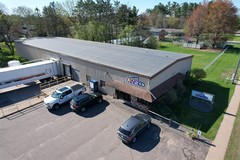
Metal roofing has protected industrial buildings for generations, and for good reason. A well-maintained metal roof can last decades, resist fire, and shrug off harsh weather. The challenge is that older metal roofs eventually develop leaks at seams and fasteners, and rust can set in over time. Many owners assume a full tear-off is their only option, but that is often not the case.
A restoration or recover approach can extend the life of an existing metal roof significantly, usually at a fraction of the cost and disruption of replacement. Adding a new membrane or coating over a sound metal deck seals vulnerable points and improves energy efficiency without hauling the old roof to a landfill. If your facility has an aging metal system, our metal roof recover services are worth exploring before committing to a complete replacement.
There is no single best answer for every building. The right choice balances several factors, and weighing them honestly leads to a roof that performs for the long haul. Consider the following when evaluating your options:
A professional roof inspection is the clearest way to understand where your current roof stands and which system makes sense going forward. Our team can assess the deck, drainage, insulation, and existing membrane, then lay out realistic options. You can learn more about our full range of commercial roofing services and how we tailor each project to the building in front of us.
Whatever system covers your facility, consistent maintenance is what turns a good roof into a long-lasting one. Small issues like a loose seam, a clogged drain, or minor membrane damage can escalate into major leaks if they go unnoticed. Scheduling regular inspections, clearing debris, and addressing minor wear early keeps your warehouse dry and your repair bills predictable. When problems do arise, prompt commercial roof repair in Wausau prevents a small fix from becoming a costly emergency.
When a roof has reached the end of its service life, replacing it with the right system is one of the smartest investments a facility owner can make. A well-planned commercial roof replacement in the Wausau area protects everything stored beneath it, improves energy performance, and adds measurable value to the property. Choosing a material and installer suited to Wisconsin's demanding weather makes all the difference in how that roof performs over the coming decades.
Understanding what type of roof is used for warehouses is the first step toward making a confident decision for your building. Whether you are weighing a single-ply membrane, considering a metal recover, or simply want an honest assessment of your current roof, our team serves Wausau and neighboring communities with straightforward guidance and quality workmanship. Reach out to contact us for a conversation about your facility and the best path forward.
October 15, 2026
October 3, 2026
October 1, 2026
September 17, 2026